
Showing posts sorted by relevance for query starr king. Sort by date Show all posts

Tuesday, September 05, 2006

“Keep My Memory Green”

[[H I S T O R Y]] * [Author’s note: Demonstrating the evanescence of fame, the California Legislature last week approved a joint resolution to replace one of its two statues in the U.S. Capitol’s Statuary Hall--that of Thomas Starr King, a 19th-century minister and the “orator who saved the nation”--with a likeness of Ronald Reagan. The sponsor of this legislation, Republican state Senator Dennis Hollingsworth, told The New York Times that he had been surprised, during a visit last year to Washington, D.C., to discover that California’s sole contributions to Statuary Hall were representations of 18th-century missionary Junípero Serra and King. “To be honest with you, I wasn’t sure who Thomas Starr King was,” he said to the Times. “And I think there’s probably a lot of Californians like me.” He complained further, that King wasn’t a native Californian (which, of course, was true of Reagan as well: he was born in Illinois.) There was some opposition to King’s replacement in the Capitol, including from David Sammons, the head of Berkeley’s Starr King seminary, who was quoted in the San Francisco Chronicle as saying: “In California, the two people who were chosen [for inclusion in the hall] were both clergy. Starr King is a stellar example of religion having a positive effect on the world.” However, the Democrat-dominated legislature easily passed Hollingsworth’s bill. It’s a sad day when the ignorance of a GOP lawmaker results in the expulsion from D.C.’s most famous statuary showcase a tribute in bronze to an individual who not only helped hold the United States together during the Civil War, but was instrumental in saving what’s now Yosemite National Park. That he should be replaced by Reagan, whose two terms in the White House served to divide the nation, and whose environmental record was anything but stellar (“Trees,” Reagan once said, “cause more pollution than automobiles do”), is nothing short of insulting. Even if Dennis Hollingsworth doesn’t know the history of Thomas Starr King, that doesn’t mean that you shouldn’t. Below, I am featuring a chapter from my 1995 book, San Francisco, You’re History!, in which I recount King’s many contributions to his state and era.]

* * *
No student of American history can fail to be moved by the cool bronze and marble figures that encircle Statuary Hall, the vast former House of Representatives chamber at the U.S. Capitol in Washington, D.C. Most of the 92 figures honored there are immediately familiar, from Generals Ulysses S. Grant and Robert E. Lee to Senator Henry Clay, Mormon leader Brigham Young, and President John Quincy Adams. But every once in a while the echo of your footfalls will stop abruptly, and you'll find yourself standing quizzically before the representation of a person whose notoriety has somehow been displaced by successive waves of the more recently famous.

Who, for instance, was Thomas Starr King?

In mid-19th century California, that question would have been as unlikely as someone today asking Who is Bill Clinton? or Who is Sean Connery? or Who is Janet Jackson? After all, had it not been for “Starr King,” as he was best known, this state might have thrown its lot in with the Confederacy during the Civil War and might later have lost Yosemite to private exploiters.

It’s surprising how much influence King had in San Francisco and California, given how little of his life was actually spent here. He was born in New York in 1824, and after his family moved to New England, educated himself in history, languages, classical literature, and theology. Following stints as a grammar school teacher and a bookkeeper, he heeded the same call to religious toil that had sounded for his father, a Universalist minister. By 1848 he was pastor at Boston’s Hollis Street Unitarian Church.

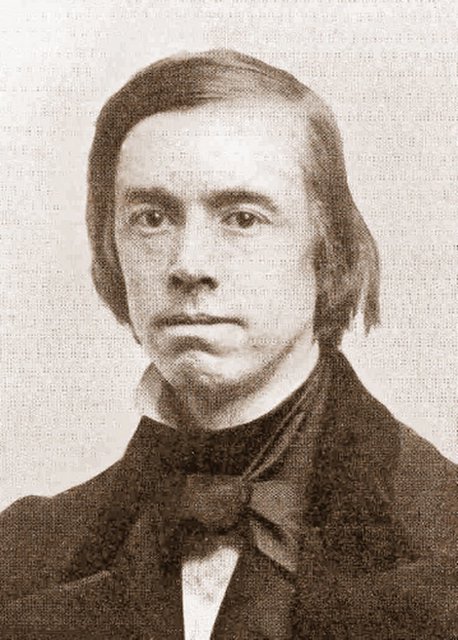
King was a slight man with a weak chin and thin, straight blond hair, and in photos he has the sort of tightly controlled features and intense eyes that are common on old-time undertakers. But his voice ... His voice was the kind to silence a fidgety crowd, to quiet even an unruly mob. Its strong, confident timbre was near-powerful enough to imbed itself in church walls. People would come faithfully before his rostrum on Sundays to not only hear what he said, but to enjoy his electric delivery. As his friend, the anti-slavery advocate and Unitarian minister Theodore Parker phrased it, King had “the grace of God in his heart and the gift of tongues.” It wasn’t long before he ranked among Boston’s most popular preachers.

However, King was omnivorous in his interests. In 1860 he published a lovingly detailed appreciation of New Hampshire called The White Hills: Their Legends, Landscapes, and Poetry. He also joined the Lyceum circuit, rivaling Henry Ward Beecher as a lecturer on various topics of the times.

Like many other well-read people in pre-Civil War America, King was concerned that trouble would arise from the 1860 presidential race--an election that would help decide whether the United States should remain whole or be cleaved asunder by the poised ax of slavery. The Democratic Party’s hesitation to nominate Senator Stephen A. Douglas of Illinois, “the only Democrat who could have reached out beyond the slaveholding South and gathered up enough votes from the border states to win,” according to American Heritage magazine, and the subsequent formation of a Democratic splinter group called the Constitutional Union party, almost assured lawyer Abraham Lincoln’s election on behalf of the new Republican Party. If that happened, King knew, the South was likely to choose secession over governance by a president who, despite some wishy-washiness on the issue, had been firmly cast in the public’s mind as an abolitionist.

Unwilling to sit out the coming conflict in the socially stratified seclusion of Beantown, King took up an invitation in 1860 to lead a struggling flock of Unitarians in faraway and still small (population 56,800) San Francisco. Accompanied by his wife, Julia, he booked ship passage to the Bay Area via Panama, explaining to a friend that “I do think we are unfaithful in huddling so closely around the cozy stove of civilization in this blessed Boston, and I, for one, am ready to go into the cold, and see if I am good for anything.”

* * *
At the time, California was busily charting its political course. Historians disagree, but something between 7 percent and 40 percent of the state’s 380,000 inhabitants had come from slaveholding areas. Only seven of California’s 53 newspapers endorsed Lincoln for the presidency, and after the election was decided in the old rail-splitter’s favor, more than a few of those papers that had opposed him called on the state to splinter from the Union and hook up with Oregon as an independent Republic of the Pacific. Back in what was then called Washington City, California Representative John C. Burch called on this state to “raise aloft” the Bear Flag that had flown above the short-lived California Republic in 1846.

After the Confederate siege of Charleston, South Carolina’s Fort Sumter in April 1861, “anti-Union plots and rumors of plots proliferated” in both Oregon and California, Alvin M. Josephy Jr. writes in The Civil War in the American West. “Pro-Southern organizations, including the conspiratorial Knights of the Golden Circle, spread through the two states, the Bear Flag, as well as palmetto flags honoring South Carolina, flew in a number of California towns, and Unionists’ fears of a secessionist coup mounted.”

There had also been fears concerning the loyalty of federal forces on the West Coast, headed as they were by Brigadier General Albert Sidney Johnston, a Texan with Southern sympathies who had been appointed during the last days of James Buchanan’s presidency to supervise Union armies in not only California, but also Oregon and Washington Territory. But Johnston acted unwaveringly in his command, calling in additional troops to fortify San Francisco’s unfinished Fort Point and transferring ammunition from the federal arsenal at Benicia to the better-protected fortress on Alcatraz Island. (Only after the Lincoln administration grew suspicious of Johnston and replaced him with Brigadier General Edwin V. “Bull Head” Sumner, just prior to the Fort Sumter engagement, did Johnston journey secretly across Southern California to offer his services to the Confederacy in Texas.)

Starr King had little patience with secessionists. His voice rang out from San Francisco: “Our city turns her face persistently towards the East--signifying that California has no insane vision of independence; that she desires no isolated sway over the Pacific, but is bound by loyalty to the empire whose flag she plants on Mendocino, the Hatteras of the West.” King’s physical health “was not good,” explained B.E. Lloyd in Lights and Shades in San Francisco. “An affection of the throat frequently gave him trouble.” Yet he traveled the state, from cities to dreary mining camps, employing biblical themes and his powerful oratorical presence on behalf of Lincoln and California’s essential obeisance to the Union. In one of King’s most oft-quoted speeches, he demanded that “the doctrine of secession be stabbed with two hundred thousand bayonet wounds, and trampled to rise no more.”

* * *
Such patriotic fervor weighed mightily on legislators as they met in Sacramento, and much to the surprise of California’s all-Democratic and anti-Lincoln delegation in the nation’s capital, on May 17, 1861, a joint-house resolution was released, declaring that the 31st state would remain firmly in the Union fold. Confirming California’s position were the state elections of that same year, which listed in favor of Republicans and Unionist Democrats, and resulted in sending railroader Leland Stanford to Sacramento for two years as the state’s first Republican governor.

Even after California had abjured from becoming a Confederate hot spot, King didn’t lose interest in the War Between the States. In fact, with his impassioned endorsements of the United States Sanitary Commission, the “Red Cross of the Civil War,” California managed to raise $1,234,000 to help care for sick and dying soldiers--about one-quarter of what the relief agency received from all over the country during the four years of bloody hostilities. Dr. Henry Whitney Bellows, New York founder of the Sanitary Commission, described King as “the eloquent voice, the quickening soul” of his organization’s California contingent.

But the clergyman’s energies weren’t exhausted completely into the political arena. He sought to enhance San Francisco’s literary reputation, making friends with writers such as Bret Harte and, through him, becoming acquainted with such recipients of later fame as Mark Twain and the stripling poet Charles Warren Stoddard.

He took the opportunity as well to appreciate California’s natural bounty. An early environmentalist, King had a poet’s talent to describe the state’s mountains, rivers, and deserts to San Francisco audiences who had seen very little of their huge, still-unfettered homeland. As he had earlier sat down to honor New Hampshire in print with The White Hills, so he planned to champion the Bear State’s more rugged landscape, with special emphasis given to the waterfalls, forests, and cliff faces of the Yosemite Valley. “Great is granite,” King proclaimed, sharing a passion he’d gained from years of mountain climbing, “and Yosemite is its prophet.”

It was partly through King’s efforts that Yosemite--which he had visited for the first time shortly after his arrival in California, in 1860--survived to be written about in 1912 by Scottish philosopher and scientist John Muir. During the decade following Yosemite’s “discovery” in 1851, the U.S. Cavalry had herded the Ahwahneechee Indians away from their sacred valley, and it was rapidly being fenced, farmed, and otherwise homesteaded. Travelers who visited the area, hoping to enjoy wilderness delights that they had read about in newspaper descriptions, were disappointed to see alpine valleys given over to the pleasure of cud-sucking cattle.

Powerful easterners who read King’s dispatches about Yosemite’s slow destruction were finally moved to action. In 1864, Frederick Law Olmsted, superintendent of New York’s Central Park and the country’s most respected landscape architect, encouraged President Lincoln and Congress to preserve Yosemite Valley and the Mariposa Grove of Big Trees as a natural scenic area safe from construction. This was the nation’s first such experiment in environmental protection, and it set the stage for many more preservation actions in the future.

But Starr King didn’t ignore his primary responsibility to religion. Indeed, on January 10, 1864, just two months before his career came to an unexpectedly early close, he dedicated the First Unitarian Church of San Francisco, a stirring $90,000 Gothic edifice, with seating for 1,500 God-fearing souls, that still stands at Franklin and Geary streets, in Japantown.
* * *
Cause of King’s death on March 4, 1864, when he was just 39 years old, was ascribed to the one-two punch of diphtheria and pneumonia. The San Francisco Bulletin made room for Bret Harte’s final poetic panegyric to the city’s most outspoken humanitarian. The Alta California newspaper gave over most of its front page to King’s passing, noting sadly that the preacher’s book on Yosemite had never been finished. The United States Mint in San Francisco closed in his memory, along with other government offices, courts, and businesses. In Sacramento, legislators had the pastor’s portrait mounted in the statehouse and they credited him officially as “the man whose matchless oratory saved California for the Union.”

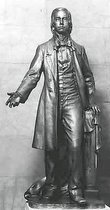
King’s death-bed request had been to “Keep my memory green.” But beyond the memories of his loyal followers, little in the way of a lasting tribute was made until 1892, when a statue was raised on the pastor’s behalf in San Francisco. Sculpted by the famed Daniel Chester French (whose work can be found peppered about New York City), it stands in Golden Gate Park, at one corner of the Music Concourse. His portrayal in bronze at Statuary Hall, the creation of Haig Patigian, was unveiled in 1931. The remembrance that might have stirred Thomas Starr King’s heart most, though, is not a thing of artificial beauty, but of natural eminence--a literal way of keeping King’s memory “green.” After Yosemite won national park status in 1890, one of its mountains and a redwood in the Mariposa Grove were named for the man whose eloquence had helped save them.

Wednesday, June 03, 2009

There They Go Again

These aren’t good times for the Republican’t Party. Only 20 percent of Americans self-identify themselves as GOPers (compared with 38 percent who call themselves Democrats), and polls show that Republican’ts are losing ground with practically every national demographic group. Only 11 percent of Republican’ts are Hispanic (while 85 percent are white conservatives), and the party’s chance of attracting more Hispanics--the fastest-growing ethic group in the United States--are significantly endangered by the losing battle some high-profile conservative activists are waging against President Barack Obama’s first U.S. Supreme Court nominee, Sonia Sotomayor. The GOP has turned into a Southern regional party, and even onetime presidential candidate Mike Huckabee warns that it’s at risk of becoming as “irrelevant as the Whigs.”

So you can understand why members of today’s fractious GOP might be inclined to cling desperately to the myth of Ronald Reagan. They see the 40th president as somebody who brought the country together, brought down the Soviet Union single-handedly, and held down taxes (none of which is quite accurate). And in the absence of any charismatic leader to counter President Obama (Dick Cheney? Mitt Romney? Sarah Palin? Newt Gingrich? Huckabee? Fuggitaboutit!), they continue to hold up Reagan as their philosophical standard-bearer. It doesn’t matter that he left office 20 years ago and died five years back.

The latest manifestation of this hero worship was today’s unveiling of a seven-foot-tall, bronze Reagan statue in the Rotunda of the U.S. Capitol in Washington, D.C. As I have reported before on this page, the California Legislature voted in the fall of 2006 to replace one of its original two sculptures in the Capitol’s Statuary Hall with this one of the former B-movie actor turned Golden State governor. The Reagan likeness will join one of 18th-century missionary Junípero Serra. So who gets the boot to make way for Ronnie? Thomas Starr King, a 19th-century minister and orator who is credited with keeping California from becoming a separate nation during the Civil War and helped save Yosemite National Park. King’s statue, the work of renowned San Francisco sculptor Haig Patigian, was placed in Statuary Hall back in 1931. According to Wikipedia, it will be moved to “the second floor of the rotunda at the state Capitol in Sacramento.”

Maybe there, people will have more respect for the contributions King made to history.

READ MORE: “Dear Wingnut, Ronald Reagan’s Dead. Time to Move On,” by Glenallen Walken (Salon); “Sotomayor a ‘Racist’? Really?” by Gene Lyons (Salon).

Saturday, November 19, 2005

Salon's Top 10


[[M E D I A]] * Can Salon, the San Francisco-based online journal of politics, books, entertainment, and culture, really have turned 10 years old this week? It doesn’t seem as if I’ve been appreciating it for that long. But appreciate it, I most certainly have. Particularly since the late 1990s, when Salon was one of the few prominent American news outlets to question what was fast becoming conventional wisdom about the need for Republicans to destroy the presidency of Democrat Bill Clinton in order to save the office of the presidency itself.

It was Salon that first laid bare the hypocrisy of U.S. Representative Henry Hyde (R-Illinois), then head of the House Judiciary Committee and the man who was expected to sit in judgment of Clinton’s wholly personal relationship with a 22-year-old White House intern--despite the fact that Hyde, three decades earlier, had engaged in his own extramarital affair with a younger woman. Salon also “outed” other glass-housed but stone-throwing GOP politicians, including Congresspeople Helen Chenoweth (R-Idaho) and Dan Burton (R-Indiana), and raised doubts about the impeachment motives of special counsel Kenneth Starr and some of his principal witnesses. Salon was practicing gutsy, investigative, but controversial journalism, challenging both the righteous indignation of the Republican Party and the simplistic script other publications were using to cover what they’d convinced themselves was a latter-day Watergate. Salon took considerable flak for its exposés, but was eventually shown to have been wise to buck the national media’s over-the-top chorus of Clinton condemnation. The former president has since gone from being the whipping boy of froth-mouthed wingnuts to being christened “the most influential man in the world” by Esquire magazine. And Salon--which started out as a weekly publication, created by escapees from the San Francisco Examiner--has evolved into a daily, award-winning model of how journalism can be practiced on the Web.

There have been losses and potholes along the way. That’s to be expected. I still miss James Carville’s witty “Swamp Fever” column about politics, and I continue to shake my head at the confidence demonstrated by the usually perceptive columnist Sidney Blumenthal, who just a week before last November’s U.S. presidential election was held, predicted that George W. Bush’s defeat was assured. (Senior writer King Kaufman includes that essay in a retrospective piece titled “Salon’s Worst Calls.”) I also miss this Webzine’s former “Wanderlust” travel department, which allowed me on occasion to add my own voice to those of other Salon contributors (see here and here). On the other hand, the number of things Salon has done right over the last 10 years--from its assiduous coverage of the bizarre 2000 presidential race and the horrific September 11 attacks, to its recent reporting on Bush’s CIA leak scandal, the devastation wrought by Hurricane Katrina, and the rapid decline of public support for the Iraq war--far exceeds that of its errors. I look forward to the introduction of Walter Shapiro, formerly a political columnist for USA Today and Esquire, as Salon’s new Washington bureau chief (as promised by editor in chief Joan Walsh), and would find my days poorer were I deprived of Salon’s War Room political blog, Heather Havrilesky’s sassy “I Like to Watch” TV column, or the lengthy, sometimes quirky interviews Salon does with newsmakers across the political, pop-cultural, and personality spectrum.

But of course, reliable reporting and sharp writing don’t necessarily guarantee commercial success. Look back at so many of the other Webzines that surfed into view during the ’90s dot-com boom, only to fade out again amid the Bush economic bust. Salon has suffered its own financial woes over the past decade, having to seek contributions from readers as well as investments from more deep-pocketed businessfolk (among them Jann Wenner of Rolling Stone). In 1999, the company took its stock public, only to see its demise prematurely predicted; later, it introduced a “premium” subscription component, whereby readers can sign up for full access to the journal’s contents (without any annoying advertising) or partial access (with ads). After watching Salon’s struggle to survive, and appreciating its commitment to alternative journalism, I figured that $35 a year for complete, ad-free admittance was a small price to pay for ensuring this thoughtful publication’s longevity.

Who knows what the next 10 years will bring. More wars? International political realignments? An end to AIDS and “reality” TV? The start of serious attention to global warming? A restoration of the historic separation between public service and private religion? Dubya strapped into a golf cart for the rest of his life? I’m just hoping that Salon will stick around to cover it all.

READ MORE: To find a rundown of Salon’s 10th-anniversary features, click here.

Wednesday, November 08, 2017

Big Bertha: The Housekeeping Mayor


(Above) Bertha Landes shakes hands with dentist-turned-mayor “Doc” Brown, whom she defeated in 1926.

(Editor’s note: Thanks to yesterday’s election in Seattle, the largest city in Washington state will soon have a woman—a lesbian, no less—installed in its mayor’s chair. Although there are still ballots yet to be counted, The Seattle Times reported last night that 59-year-old Democrat and former U.S. Attorney Jenny Durkan leads with 61 percent of the vote, on her way to becoming the burg’s 56th mayor. If her margin of victory holds against challenger Cary Moon, an activist with little political experience, Durkan will be the second woman ever to lead Seattle, her only predecessor being Bertha Knight Landes, who was chosen as America’s first big-city woman mayor 91 years ago, in 1926. Those are big shoes for Durkan fill, as I explain in the following excerpt from my 2003 book, Eccentric Seattle: Pillars and Pariahs Who Made the City Not Such a Boring Place After All [Washington State University Press]. Let’s hope she’s up to the task.)

When they remark at all upon the political career of Bertha Knight Landes, modern historians generally concentrate their attention around her call for strengthened law enforcement in Prohibition-era Seattle, her efforts to improve city planning and management of the municipal power company, and her demand that professional standards replace cronyism in hiring civic administrators. Those annalists observe how “peaceful” and “quiet” Landes’ two-year mayoral stint was when compared with those of her more colorful but often less ethical predecessors. And they go on at some length about her conviction that a city should be run under the same standards of efficiency, decency, and morality that would pertain in a home.

But Landes wasn’t yet recognized for most of these things in the early 1920s. Back then, she was known more widely as the woman who’d tweaked Seattle’s patriarchal establishment in a bloodless and brief coup that won her not only the powers of the mayor, but those of the police chief, as well.

The story is rather comical. It seems that in the summer of 1924, Landes was serving her first term on the city council and had recently been elected to its presidency. Edwin J. “Doc” Brown, a flamboyant former “painless” dentist and Seattle’s latest “tolerance mayor,” had decided to attend the Democratic National Convention in New York City. During his absence, council president Landes automatically became acting chief exec. (The deputy mayor’s office didn’t yet exist.) Newspapers played up Landes’ precedent-setting temporary assignment, but nobody really expected her to do much while Brown was off whooping it up at Madison Square Garden.

However, on June 23, 1924, Landes summoned Police Chief William B. Severyns into her office. She handed him a letter explaining how disturbed she was by repeated violations of local bootlegging and gambling laws and by the youthful chief’s recent intimation to the press that probably 100 men on his force were too corrupt to perform their jobs properly. If that’s true, her letter read, “then it must follow as a logical conclusion that one hundred men should be removed.” Landes wanted Severyns to act within 24 hours. When he balked, complaining that Landes was merely trying to score political points at his expense, the acting mayor dismissed him in favor of Joseph Mason, his top lieutenant. Mason also refused to carry out her order, so Landes canned him, as well. Then, exercising an obscure provision of the city charter, she declared Seattle in a state of emergency and appointed herself as its new top cop.

A palsy of shock passed briefly over the town as people realized that, for the first time in its history, the positions of mayor, police chief, and city council president all belonged to the same person—and that person was a woman! But Landes didn’t break pace. She dispatched bluecoats to close the town’s most reprehensible speakeasies and gambling joints. Other violators shut down voluntarily to avoid Her Honor’s righteous wrath. A special detail was assigned to investigate beat officers and boot out any who’d benefited from graft or bribes.

Incensed Brown supporters and threatened vice operators blizzarded the mayor in Manhattan with telegrams, begging him to immediately begin his three-day train journey home. Meanwhile, Doc’s staff supposedly plotted an early end to Landes’ reformist reign. With Brown still a day out from Puget Sound, his secretary had a pair of the mayor’s suitcases dropped off at one of his favorite breakfast haunts, and then instructed Brown’s chauffeur to retrieve them before picking Landes up for work. Bertha naturally inquired about the luggage, but the equally duped driver could say only, “It appears that the mayor is back in town.” This impression was reinforced by what Landes found in Brown’s office: another suitcase lying open with a pair of the mayor’s shoes inside; some current-edition New York newspapers; and a lighted cigar reclining beside Brown’s prized autographed photo of perennial presidential candidate William Jennings Bryan. Convinced that Doc Brown had indeed returned, Landes cooled her plans to shake up more city agencies.

Mayor Brown soon set about undoing Landes’ accomplishments. But not before the national press could applaud her audacious 10-day rule. “Men in the past have been wont to talk patronizingly of ‘women’s instinct’ as opposed to ‘man's reason,’” editorialized the Los Angeles Times. “Seattle seems to prove that an instinct for getting things done is far more useful in the world than an intellect that only talks about them.”

Not all local media were pleased, however. As the Seattle Argus groused, Landes “proved conclusively that woman’s sphere is in the home or at any rate that hers is not at the head of the city government.”

Two years more, and the Argus would be eating those words.

* * *

As the first woman mayor of a major American city, Bertha Landes helped pave the way for all women in politics. Yet she was hardly your classic feminist. “In fact,” explained one of her longtime friends, “she was decidedly opposed to the women’s suffrage movement when it was launched, believing that a woman’s place was in her home, with her children.”

Landes’ own upbringing had been very traditional. She was born Bertha Ethel Knight at Ware, Massachusetts, on October 19, 1868. Her family’s pious American roots wound all the way back to the 17th-century Massachusetts Bay Colony. The youngest among nine children, she watched at least two of her siblings find their way into circles of fame. Her brother Austin entered the navy and eventually became commander in chief of the U.S. Asiatic Fleet. Sister Jessie married David Starr Jordan, an ichthyologist and president of Indiana University, who later headed Stanford University. As a woman in the 19th century, it seemed unlikely that Bertha could attain renown except through marriage. Still, she was too filled with intelligence and dynamism to wait quietly until some ambitious gent swooned before her perennial smile, alert dark eyes, and olive skin.

In 1888 Bertha went to live with the Jordans in Bloomington, Indiana, and enrolled at her brother-in-law’s university. After only three years, she’d earned a degree in history. She had also developed an abiding interest in politics. This was during the rise of Progressivism, a movement largely among middle-class, educated, and urban Americans who believed in trust busting, public welfare reforms, and a graduated income tax—all intended to restrain the corrupting power of the nation’s wealthy minority. President Theodore Roosevelt was Progressivism’s poster child, and he incorporated the movement’s liberal precepts (at least temporarily) into the Republican agenda. David Starr Jordan was a great fan of Roosevelt’s and helped inculcate Bertha with progressive ideals. As a result, she thereafter labeled herself a Republican, though even before her mayoral election the GOP was already turning more conservative, away from egalitarian activism.

One other thing her college experience provided Bertha was an introduction to geology student Henry Landes. Despite conventional wisdom of their era, which libeled highly educated women as “unfit” for matrimony, he appreciated her strength and individuality. The pair were wed in January 1894 and the next year moved to Seattle, a town that by then had already survived fire and fiscal disaster and seemed stubbornly on its way to success. Henry joined the faculty at the University of Washington, recently moved from downtown to a single building (Denny Hall) on the north shore of Union Bay. Bertha slipped comfortably into motherhood. She bore three children, the two oldest of whom died early, and then adopted a 9-year-old girl. The family built a two-story University District home, at the corner of Northeast 45th Street and Brooklyn Avenue (a site now occupied by a hotel), where they fended away cows loping up from the Green Lake farmlands and engaged impoverished students in debate over copious helpings of Bertha’s Boston baked beans. (She later joked that her beans won her a good thousand votes from appreciative UW alumni in the city.)

(Left) Henry Landes

Careerwise, Henry rode a fast track, being named dean of the new College of Science and very nearly the UW’s president. His wife had family duties to think about, but as their children grew, Bertha indulged other interests. “[S]he had to keep busy,” her adopted daughter, Viola, told an interviewer in 1965. “She wasn’t aggressive, but if she wasn’t engaged in planning something or other, she was bored to tears.” The future mayor volunteered for work at the University Congregational Church and the Red Cross, and she seemed ubiquitous in women’s clubs.

Today, clubwork seems a quaint avocation. But for middle-class ladies of Bertha Landes’ time, it offered unique chances to discuss community and world issues, as well as a friendly forum in which they could amass the self-confidence necessary to secure more influential roles in male-dominated society. It was through her leadership of several clubs that Landes first attracted the favorable notice of local business and government archons. In 1921, after she’d organized a major three-day exhibit of the latest home-related products, Mayor Hugh Caldwell gave her his personal stamp of approval by tapping her as the only woman member of an ad hoc commission charged with suggesting remedies for the city’s intractable unemployment problems.

* * *

More important than what this commission accomplished (very little) was that it broadened Bertha Landes’ name familiarity. By 1922, women’s organizations—and even a few men who’d come to respect her management abilities—urged her to try for a city council seat, along with another woman, boardinghouse operator Kathryn Miracle.

The odds weighed heavily against Bertha. Washington women had earned the right to vote in 1910 (a full decade before enfranchisement was extended nationwide), but many of them continued to eschew the polls. Although a female school teacher had been elected to the Kirkland City Council in 1911, Seattle’s Republican plutocracy believed that women in public office would be unacceptably bad for business. Candidate Landes had to present herself in such a way as to not threaten men (who might be offended by political ambition and anti-vice zealotry in a woman) or offend more traditional women (who saw their place in the home, not on the stump). Yet she also had to prove she was decisive and knowledgeable enough to fully represent the moral and welfare concerns of Seattle’s distaff element (40 percent of the population). The contradictions involved made many of her speeches sound like apologies for running. But thanks to the passionate assistance of clubwomen in her campaign, when votes were tallied in May 1922, Bertha Landes had won a landslide victory and pulled Kathryn Miracle onto the council aboard her coattails.

At just over five feet tall, Bertha Landes was not physically intimidating. Nor was she a fiery orator. Police Chief Severyns once joked that “Compared with Mrs. Landes, ‘Silent’ Cal Coolidge is a circus spieler.” However, she possessed what the New York World described as “calm tenacity.” Marshalling this alongside her probity and felicitous demeanor, the new councilwoman was unexpectedly able to get things done. In her four years on the council, she could take principal credit for establishing a city planning commission, supporting public utilities, and stiffening regulations on allegedly salacious dance halls.


Downtown Seattle in the mid-1920s

If anything blocked more systemic change, Landes believed, it was Mayor Brown. He preferred a laissez-faire approach to governance, especially when it came to taming prostitution, drinking, and Seattle’s other vivid vices. While Landes “realizes that a seaport cannot be run like a Sunday school,” as one pro-labor newspaper phrased it, she and Brown often butted heads over matters of “civic decency.” On most occasions he prevailed; but she notched up her triumphs, too, including her legendary 1924 reform spree as acting mayor.

Landes finally pulled out her heavy guns against Doc Brown when she proposed eliminating the office of mayor altogether. As other metropolises had done, she pushed to substitute a professional city manager in Seattle, someone beholden to the council who would run the town like a big business. It was a bold proposition, too bold for many voters. But Bertha refused to abandon it—even if it meant she would have to run for mayor herself in 1926 and defeat Brown in order to blunt his opposition to the plan.

“I filed for Mayor much against my own personal inclinations,” Landes would insist repeatedly. She didn’t, though, do so without careful calculation. By her figuring, she could win Doc Brown’s seat and at the same time convince voters to sign off on the city manager plan. Although this would mean she’d never actually assume the mayor’s mantle, as president of the city council she’d still have gained the power necessary to overhaul municipal government. Furthermore, Landes told the newspapers (most of which eventually endorsed her candidacy) that if the city manager proposal lost but she unseated Brown, she would run the mayor’s office “as nearly like a city manager as the laws will permit.”

It was a hard-fought campaign. Doc’s backers spread rumors that, as mayor, “bluenose Bertha” would curtail Seattleites’ personal liberties. Bertha struck back with allegations that under Brown, “general police and criminal conditions here are intolerable.” This seemed to be confirmed by the phenomenal success of local rumrunner Roy Olmstead, whose trial for violating the Prohibition Act was concurrent with the Landes-Brown race. Bertha didn’t have to run as the women’s candidate for mayor, the way she had for the council. Instead, she cast herself as an anti-politician, someone free from the ties of finance and favor that held Mayor Brown in check.

The city manager idea earned a resounding “no” from voters. But 57-year-old Landes triumphed, if by fewer than 6,000 votes. And one of her first official acts was to fire William Severyns—the police chief Brown had reinstated after Bertha’s 10-day coup.

* * *

“Big Bertha,” as Seattle’s criminal contingent came to call her—with equal measures of derision and respect—began her days at 9 a.m., when a chauffeur picked her up at the Wilsonian Apartments on University Avenue (where she and Henry Landes had moved to enjoy their maturity), and they usually continued into a nighttime schedule of speechmaking. She proved to be a chief exec with an uncommonly strong social conscience and popular ideals. “Play the game fairly,” she once declared. “Meet life honestly—never whine and play the coward, but take life as it comes. ... Don’t be a shirker but do be a worker. Above all, so conduct yourself that you can look your own soul in the face. You cannot be true to yourself without being true to everyone else.”

Almost from the hour of her inauguration, there was speculation that she might be the woman man enough to become governor of Washington or even take control of the White House. Male observers periodically remarked how her mind worked more like a man’s than like a woman’s. “Was that a compliment, or was it not?” Landes once mused. “I never did decide one way or the other.”

Bertha pursued her goals with a diligence and effectiveness that was often referred to as “civic housekeeping.” She worked to keep down Lake Washington pollution and to put up a new public hospital. She made wide-ranging improvements in City Light, expanded the parks system, installed qualified pros at the helm of Seattle’s public works departments, saved the street railway system from immediate financial collapse, and was way ahead of the curve in advocating a merger of city and King County governments. She settled petty disputes between local law-enforcement agencies in order to win their unified support in curbing bootlegging and reducing traffic accidents. (By 1930, Seattle had one car for every four residents and more than its share of roadway mishaps.) Aside from the ruckuses she caused by trying to lower the wages of older city workers and enlist “stool pigeons” to augment police protections, her administration was remarkably without scandal.

As the late newspaper columnist Emmett Watson put it in his book Once Upon a Time in Seattle, Landes “had no agenda beyond being the best mayor Seattle ever had.”

(Right) Frank Edwards

Yet only two years after she entered city hall, Seattle voters booted her out in favor of Frank Edwards, a poseur Progressive and the shady proprietor of several second-rate movie houses. “Old boy” politics was partly to blame. Edwards had twice as much money as Bertha in his campaign war chest, much of it collected from businesses that feared Bertha’s civic-minded intrusions into their affairs. Rather than debate Landes in public, he ran a steadily negative media campaign, during which he convinced Seattleites—against all the facts—that their city had suffered under Landes. Edwards even used Bertha’s storied legislative acumen and snowdrift of newspaper endorsements against her, painting her as too mired in “the system” to recognize its failures. And he wasn’t above shaming Seattle for obeisance to “petticoat politics.” “Elect Frank Edwards,” read his pointedly sexist campaign slogan, “the Man You’ll Be Proud to Call Mayor.” (After Landes lost, the Portland Oregonian ridiculed Seattle for wanting to be a “he-man’s town” and suggested that, at Edwards’ inauguration, a pair of masculine breeches might fittingly be flown from the city hall flagpole.)

But Bertha had to bear some credit for her defeat. She’d offended civil service employees by encouraging her departments to lay off workers based on their efficiency, rather than just seniority. She had failed in six years of elected service to reach out sufficiently to the working class, and still left the impression of being a well-to-do bluenose. As Sandra Haarsager stated in a recent biography, Bertha Knight Landes of Seattle: Big City Mayor, Her Honor may also have erred by currying favor with business rather than continuing to capitalize on her identity as “the woman’s candidate.” At age 59, her career as an elected official was over. Landes relocated to the college town of Ann Arbor, Michigan, where she died in 1943—12 years after voters recalled Frank Edwards from office for refusing to enforce anti-vice laws.

Ironically, Bertha’s success as a manager may ultimately have doomed her as a lawmaker. For a city accustomed to at least half-venal mayors, men such as Hiram Gill and Doc Brown, she may simply have charted too even and sane a course. As The Nation noted after her 1928 defeat, “in American cities today good-housekeeping is not good politics, shameful as it is to admit it.”

READ MORE: “7 Facts About Bertha Knight Landes, First Female Mayor of a Major American City,” by Jocelyn Sears (Mental Floss); “Seattle’s Female Mayors Have More in Common Than You’d Think,”
by Knute Berger (Crosscut).