
Rep. Charles Rangel (D-NY), “the incoming chairman of the Ways and Means Committee, told the New York Post that he’s got his eye on Capitol Hill office space now held by the man he recently called a ‘son of a bitch’”--Vice President Dick Cheney.Good for Charlie. He’s the same guy who said he’d quit Congress if Democrats didn’t take back the House this month. I’d rather have him in Cheney’s digs.
Said Rangel: “Mr. Cheney enjoys an office on the second floor of the House of Representatives that historically has been designated for the Ways and Means Committee chairman ... I talked to Nancy Pelosi about it this morning ... I’m trying to find some way to be gentle as I restore the dignity of that office.”
As for his earlier comment to the vice president, the New York Daily News notes Rangel said, “I take back saying that publicly. I should have reserved that for him when we were together privately. Believe me, he would have understood.”
Showing posts with label Dick Cheney. Show all posts
Showing posts with label Dick Cheney. Show all posts
Thursday, November 09, 2006
The Perks of Power
From Taegan Goddard’s Political Wire:


Thursday, April 13, 2006
A Cancer on the Presidency
[[L E G A C I E S]] * Thirty-three years ago, in the tumultuous midst of the Watergate scandal, then-White House counsel John Dean told his boss, Richard M. Nixon, that the administration’s cover-up was “a cancer on the presidency,” one that had to be excised before it put his entire presidency in danger.
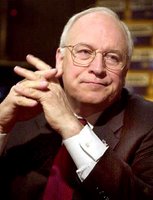 Now, with a different scandalized Republican occupying the Oval Office, The New Republic’s Ryan Lizza identifies another cancer growing on the presidency--but this time, it has a name: Dick Cheney.
I don’t subscribe to TNR, but fortunately, Steve Benen excerpts the relevant passage at his must-read blog, The Carpetbagger Report. Opining on ways George W. Bush might get his administration “back on track,” Lizza makes this suggestion:
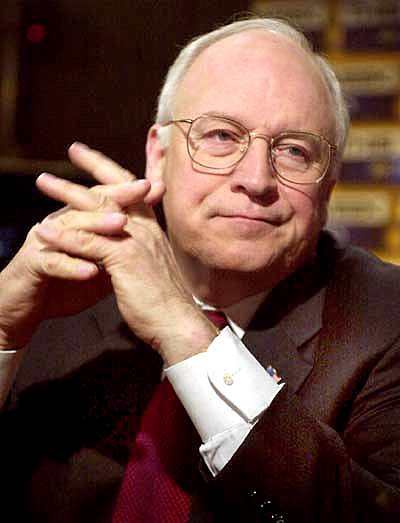 Now, with a different scandalized Republican occupying the Oval Office, The New Republic’s Ryan Lizza identifies another cancer growing on the presidency--but this time, it has a name: Dick Cheney.
I don’t subscribe to TNR, but fortunately, Steve Benen excerpts the relevant passage at his must-read blog, The Carpetbagger Report. Opining on ways George W. Bush might get his administration “back on track,” Lizza makes this suggestion:
Fire Cheney. I believe historians will trace all of Bush’s problems back to July 25, 2000, the day he picked Dick Cheney as his running mate. The Cheney rollout was met by a slew of negative stories about Halliburton, heart attacks, and his Neanderthal voting record in the House (against sanctions for apartheid South Africa, for example). Ever since, Cheney has been at the center of most Bush screw-ups: the energy task force investigation, the policy battle over torture, White House stonewalling of numerous congressional investigations, the Iraq war, the intelligence failures, and many more. (Also, Cheney shot someone in the face.) Now Cheney is a recurring star in the court filings of Patrick Fitzgerald. […]Trouble is, of course, that Cheney is an ardent loyalist, with a thick enough hide to take the blame whenever Bush needs a West Wing scapegoat. If he dumped “Shooter” Cheney, the prez would have to start taking responsibility for everything that the press now credits to the veep’s influence or interference. And Dubya isn’t about to do that.
Cheney is the cancer at the center of the Bush White House. Bush has less than three years left in office. Most political forces--Republicans jockeying for president, the coming GOP losses in the midterms, the normal decline in a lame duck’s authority--are working against him. Americans are psychologically moving beyond Bush. The only reason to give him another chance is if he indicates he’s learned some lessons and is willing to make dramatic changes. Firing Cheney would do both.
Tuesday, February 21, 2006
And Cheney Makes Three?
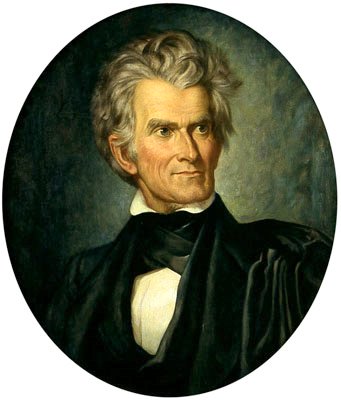 [[H I S T O R Y]] * I’m not yet deluded enough to believe that Dick Cheney will peacefully resign from the U.S. vice presidency, following his shooting earlier this month of millionaire Texas attorney Harry Whittington and the ensuing uproar. He and George W. Bush are far too fond of power to give it up without a fight--or an impeachment. And Bush doesn’t have the balls to demand that his second-in-command step down, no matter how many attorneys Cheney plugs full of birdshot, or how much damage he does to the Republican Party’s hopes of maintaining control of Capitol Hill. Besides, veep resignations are extremely rare in the United States. Of the 46 men who’ve served in that mostly feeble office, only two have resigned before their terms ended.
The first of those was John C. Calhoun, an outspoken, South Carolina war hawk who was originally elected to the U.S. House of Representatives in 1810, but within a few years was selected by President James Monroe as his secretary of war. During the much-disputed presidential election of 1824, Calhoun threw his lot in with Monroe’s secretary of state, John Quincy Adams of Massachusetts, against upstart Tennessee general-turned-politician Andrew Jackson, the Democrat. That alliance helped ensure Adams’ election by the U.S. House of Representatives, and Calhoun was subsequently installed as the new president’s V.P., though Calhoun would come in time to disapprove of what he interpreted as Adams’ favoritism toward the Northern states. Interestingly, after the election of 1828, in which Jackson again campaigned against Adams--but this time won the presidency--Calhoun stayed on in the vice president’s office. However, Calhoun soon fell out with Old Hickory too, as a result of the veep’s endorsement of the right of individual states to ignore federal laws they deemed to be unconstitutional (and to secede from the Union if necessary in protest). The last straw for Jackson may have been Calhoun’s snubbing of Margaret “Peggy” Eaton, a woman with an allegedy sordid past who was married to Jackson’s secretary of war--and enjoyed the president as an unflagging defender. In 1832, Calhoun resigned the vice presidency in order to run (successfully) for the U.S. Senate, making room for Martin Van Buren, the charming and politically deft former governor of New York, as Jackson’s new veep.
It was another 141 years before the next vice president resigned: Spiro Agnew. A onetime Republican governor of Maryland, Agnew was elected as Richard M. Nixon’s V.P. in 1968. Even before Nixon became the first president ever to resign from office, as a result of the Watergate scandal, Agnew stepped down in October 1973. Soon afterwards, he pleaded “no contest” to a criminal charge of tax evasion, which stemmed from his reported acceptance of $29,500 in bribes during his tenure as governor. (Rather than serving jail time, Agnew was fined $10,000 and given three years’ probation.) House Republican Minority Leader Gerald Ford replaced Agnew, and succeeded to the presidency after Nixon left office in August 1974.
Arguably both the most influential and the “worst vice president ever,” Dick Cheney had become--even long before the quail-hunting debacle--a principle focus of public displeasure with the Bush White House. And the fact that he was largely unapproachable--hidden out for much of the time after the September 11, 2001, terrorist attacks in an “undisclosed location” didn’t enhance his likability, especially with the national news media. As Newsweek columnist Jonathan Alter writes this week, Cheney’s “message to the Washington press corps is the same as the one he delivered to Sen. Patrick Leahy in the Senate cloakroom, when the Democrat had the temerity to criticize him: ‘Go f--- yourself.’ By not holding a press conference since 2002, Cheney is telling the men and women assigned to cover the White House that they are irrelevant. No wonder they went crazy after learning of the shooting accident from a Texas paper.” Alter adds:
The shooting could hardly be a better metaphor for Cheney. It neatly packages his faulty judgment, insularity and arrogance in a story that is not cataclysmic on its own terms but will prove hard to forget. That’s too bad for Cheney, and certainly for Harry Whittington. But it is a blessing for anyone hoping to restore some accountability to a government that increasingly believes it is a law unto itself.However, the majority of Americans still aren’t convinced that Cheney has become a liability, either to the Bush administration or to the nation’s future. A new Time magazine poll finds 41 percent of respondents saying that the veep remains an asset to the prez, while 37 percent contend he’s a “damaging” influence. And though 58 percent declare that he’s “too secretive,” Americans continue to believe--by a 46 percent to 45 percent margin--that Cheney has the country’s best interests at heart. While 65 percent of respondents to the Time poll think Cheney “should have immediately taken public responsibility” for the Whittington shooting, rather than having to be talked into making a statement by the prez, there’s no groundswell yet for the veep’s resignation over the Texas incident.
 It’s more likely that Cheney will play the good soldier, and try once more to disappear into the polished West Wing woodwork. With Bush’s administration beset by scandals, what remains of the prez’s agenda under threat of hijacking by right-wing special interests (which are looking to this White House for, among other things, a constitutional amendment against same-sex marriage), and GOP aspirants to the presidency deliberately defying Bush’s wishes on everything from a congressional investigation into his warrantless domestic spying program to an administration proposal that would turn management of six major U.S. seaports over to a United Arab Emirates company, Bush may need Dick Cheney more than ever. Even if, as Newsweek reports, the veep’s “aloofness from the ebb and flow of politics and public opinion has ... dulled his senses in a way that is not helpful to his boss, who has been busy lately defending his administration from criticism that it was badly out of touch during Hurricane Katrina.” If the cost of his help should be the occasional shooting of some pesky lawyer or maybe even a Democratic critic or two ... well, Bush can always send surrogates out to minimize the scandals and out-shout administration opponents guesting on television’s conservative-friendly Sunday-morning talk shows. That tactic has worked so many times in the past, why not keep it up?
DEFINING MOMENTS: In judging how Dick Cheney’s accidental shooting of an Austin attorney might be remembered by history, Los Angeles Times staff writer Mark Z. Barabak opines: “Howard Dean screamed. Dan Quayle made a hash of the word ‘potato.’ Jimmy Carter fended off a wild-eyed rabbit. Like pages in a political scrapbook, those odd episodes endure years, even decades, after the pundits and late-night comics have exhausted their high and low possibilities. Now, Vice President Dick Cheney and his misbegotten quail hunt seem destined to join that collection of frozen-frame images stored in the nation’s collective memory. Together, these incidents and others--such as President George H.W. Bush’s supposed befuddlement at a grocery store scanner--share certain threads.” Read on.
AND THEN MAYBE TOM DELAY FOR V.P.?: Speaking to an audience in San Antonio, Texas, on Tuesday, Pulitzer Prize-winning journalist Bob Woodward of The Washington Post made what seems the most unlikely prediction for the 2008 presidential race. “You’re going to think I’m crazy,” he said, “but you heard it here first. I think [Republicans] could nominate Dick Cheney.” Read on.
READ MORE: “Cheney: From Dead Quail to Lame Duck,” by Ari Melber (The Huffington Post); “Media Employ Verbal Gymnastics to Avoid Saying ‘Cheney Shot Hunting Partner’” (Media Matters); “Bush Critics You Should Trust: A Guide to the Conservatives and Republicans Who Have Turned on the President,” by John Dickerson (Slate); “Time for an Extreme Makeover at the White House,” by Nicholas Kristof (The New York Times); “Vice President Shoots Himself in the Foot,” by Gene Lyons (Arkansas Democrat-Gazette).
Friday, February 17, 2006
The Last Throes of Dick Cheney?
 [[S C A N D A L S]] * An anniversary that the Bush White House probably hopes nobody will notice, today marks 205 years since the U.S. House of Representatives broke a deadlocked election by choosing Thomas Jefferson as the third president of the United States, with Aaron Burr as his vice president--the only American veep, other than Dick Cheney, to shoot a man while in office. Burr, a former New York attorney general and U.S. senator, who’d hoped to become president himself in 1800, started out his tenure as Jefferson’s second-in-command on a negative note, by peevishly contesting his new boss’ right to occupy the White House (after all, both men had won 73 electoral votes). However, Burr’s notoriety was assured when, on the morning of July 11, 1804, he faced off in a duel against former Secretary of the Treasury Alexander Hamilton, a rival whom Burr said had maligned him in public. On a rugged ledge in Weehawken, New Jersey, the vice president shot Hamilton in the lower abdomen--a wound that resulted in the latter’s demise a day later, and Burr’s fleeing to South Carolina, lest he be arrested for murder. The veep subsequently returned to Washington, D.C., to finish out his term of service, and was never prosecuted for killing Hamilton.
At least the target of Burr’s gunplay knew what he was in for. Not so Harry Whittington, the 78-year-old Austin lawyer and “Republican fixer” who Cheney peppered with birdshot during a quail-hunting expedition at a Corpus Christi, Texas, ranch last Saturday night. It was an embarrassing episode of carelessness that soon turned into a media tempest, thanks to the veep’s knee-jerk secrecy (news of the shooting didn’t even leak out until the ranch’s owner revealed it to her local broadsheet a day later), his apparent failure to notify the White House in a timely fashion that the shooting had even occurred, revelations that Cheney had been hunting without the proper credentials, rumors that he had been drinking before he set out with his deadly weapon (followed by word that mention of Cheney having imbibed beer at lunch was mysteriously scrubbed from an MSNBC Web site), and news three days after the incident that Whittington had suffered a minor heart attack as a result of Cheney’s hair-triggered carelessness. (It didn’t help matters any, either, that White House press secretary “Stonewall Scotty” McClellan failed on Tuesday to inform reporters about Whittington’s heart attack, even though he knew about it prior to that day’s official press briefing.)
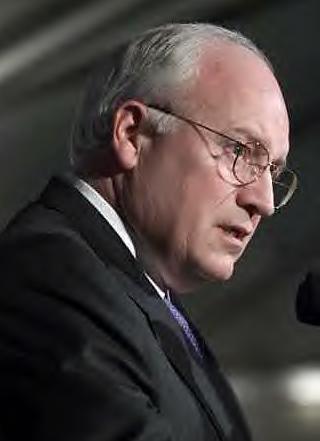 As Democrats and myriad other critics of the Bush-Cheney administration jumped on this “Birdshotgate” scandal, Republicans grew decidedly nervous. And mouthy. Marlin Fitzwater, who had served as White House press secretary under both Ronald Reagan and George H.W. Bush, told Editor & Publisher magazine that Cheney had “ignored his responsibility to the American people” by keeping a tight lid for too long on the Whittington shooting. Ari Fleischer, who’d been George W. Bush’s first press secretary, said, “It would have been better if the vice president and/or his staff had come out last Saturday night or first thing Sunday morning and announced it. It could have and should have been handled differently.” Right-wing blogger Michelle Malkin opined, “Unfortunately, this is very bad news for the White House ... The Dems will exploit this accident to smear Cheney as incapable of being trusted, weak of mind, etc. The resignation rumors will fly again.” And, sure enough, by Thursday New York Times columnist Bob Herbert was calling on the veep to “step down--for the sake of the country and for the sake of the Bush administration.” Herbert continued:
This story is never going away. Harry Whittington is Dick Cheney’s Monica. When Mr. Whittington dies (hopefully many years from now, and from natural causes), he will be remembered as the hunting companion who was shot by the vice president of the United States. This tale will stick to Mr. Cheney like Krazy Glue, and that’s bad news for the Bush administration.(Well, maybe a little funny. Certainly late-night comedians had a good laugh at the expense of the perpetually dour-looking veep. Senator Chuck Hagel [R-Nebraska] contributed to the chuckles by alluding to Cheney’s five Vietnam-era draft deferments in his statement made to the Omaha World Herald: “If he’d been in the military, he would have learned gun safety.” And of course there are all those T-shirts entering the marketplace, declaring open season on Cheney, with droll slogans such as “Guns Don’t Kill People--Vice Presidents With Shotguns Do.”)
The shooting and Mr. Cheney’s highhanded behavior in its immediate aftermath fit perfectly with the stereotype of him as a powerful but dangerous figure who is viewed by many as a dark force within the administration. He doesn’t even give lip service to the idea of transparency in his public or private life. This is the man who fought all the way to the Supreme Court to keep his White House meetings with energy industry honchos as secret as the Manhattan Project. ...
A vice president who insists on writing his own rules, who shudders at the very idea of transparency in government, whose judgment on crucial policy issues has been as wildly off the mark (and infinitely more tragic) as his actions in Texas over the weekend, and who has now become an object of relentless ridicule, cannot by any reasonable measure be thought of as an asset to the nation or to the president he serves. ...
Dick Cheney is a constant reminder of those things the White House would most like to forget: the bullying, the intelligence failures, the inability to pacify Iraq, the misuse of classified information and the breathtaking incompetence that seems to be spread throughout the administration.
Mr. Cheney would do his nation and his president a service by packing his bags and heading back to Wyoming. He’s become a joke. But not a funny one.
However, it wasn’t simply liberals such as Herbert who suggested that Cheney’s ouster might be in order. The same point was made in The Wall Street Journal by former Reagan speechwriter Peggy Noonan, who wrote that
The Dick Cheney shooting incident will, in a way, go away. And, in a way, not--ever. Some things stick. Gerry Ford had physically stumbled only once or twice in public when he became, officially, The Stumbler. Mr. Ford’s stumbles seemed to underscore a certain lack of sure-footedness in his early policies and other decisions. The same with Jimmy Carter and the Killer Rabbit. At the time Mr. Carter told the story of a wild rabbit attacking his boat he had already come to be seen by half the country as weak and unlucky. Even bunnies took him on.Although Noonan contends that “as a scandal I’m not sure [the Whittington shooting] has a big future,” she remarks that this controversy may have arisen at an opportune time:
Same with Dick Cheney. He’s been painted as the dark force of the administration, and now there’s a mental picture to go with the reputation. Pull! Sorry, Harry! Pull!
I suspect what [political advisers inside the Bush White House are] thinking and not saying is, If Dick Cheney weren’t vice president, who’d be a good vice president? They’re thinking, At some time down the road we may wind up thinking about a new plan. And one night over drinks at a barbecue in McLean one top guy will turn to another top guy and say, “Under the never permeable and never porous Dome of Silence, tell me ... wouldn’t you like to replace Cheney?”
Why would they be thinking about this? It’s not the shooting incident itself, it’s that Dick Cheney has been the administration’s hate magnet for five years now. Halliburton, energy meetings, Libby, Plamegate. This was not all bad for the White House: Mr. Cheney took the heat that would otherwise have been turned solely on George Bush. So he had utility, and he’s experienced and talented and organized, and Mr. Bush admires and respects him. But, at a certain point a hate magnet can draw so much hate you don’t want to hold it in your hand anymore, you want to drop it, and pick up something else. Is this fair? Nah. But fair has nothing to do with it.
This is a White House that likes to hit refresh when the screen freezes. Right now the screen is stuck, with poll numbers in the low 40s, or high 30s.
The key thing is Iraq. George Bush cares deeply about Iraq and knows his legacy will be decided there. It has surely dawned on the White House that “Iraq” will not be “over” in the next two years. Iraq is a long story. ...
George Bush, and so the men and women around him, will want the next Republican presidential nominee to continue the U.S. effort in, and commitment to, Iraq. To be a candidate who will continue his policy, and not pull the plug, and burrow through.
This person will not be Dick Cheney, who has already said he doesn’t plan to run. So Mr. Bush may feel in time that he has reason to want to put in a new vice president in order to pick a successor who’ll presumably have an edge in the primaries--he’s the sitting vice president, and Republicans still respect primogeniture. They will tend to make the common-sense assumption that a guy who’s been vice president for, say, a year and a half, is a guy who already knows the top job.
 Meanwhile, in Slate, Mickey Kaus countered, “The possibility that Cheney would resign--allowing Bush to appoint and anoint a successor--seemed plausible before Cheney’s hunting accident. It’s probably less likely now, because Bush wouldn’t want to be seen as having given in to the press mob.” Furthermore, winning this prez’s seal of approval won’t necessarily help a candidate, even one like John McCain who’s trying so assiduously to suck up to Bush’s narrow-minded base. Not when 51 percent of the American electorate say they’re far more likely to support a candidate who opposes Dubya than one who backs his plays.
By Friday, what had begun as a shock to the public and turned into a source of disgust (as Cheney defenders tried to blame the victim for the shooting), finally became farce. Acquiescing to pressure from political strategists, the veep agreed to give a mea culpa interview--but only if the interviewer was from FOX News Channel, a Republican mouthpiece that he had once officially endorsed. (CNN’s Jack Cafferty characterized that arrangement as “a little like Bonnie interviewing Clyde.”) The next day, Whittington, finally released from his hospital bed, told reporters that he was sorry for all the headaches he’d caused Cheney over the previous week. Whoa! Who caused trouble for whom? By any logical thinking, Whittington didn’t owe the veep an apology--quite the opposite. It was Cheney who left his hunting buddy with a face pocked by birdshot, and who then allowed his surrogates to cover for him by portraying Whittington as a lackadaisical lout for having stumbled into his gunsight. Screenwriter and novelist Howard A. Rodman, writing in The Huffington Post, likened Whittington’s raspy-voiced regrets to Mary Todd Lincoln apologizing all over John Wilkes Booth’s family for the hardships her husband’s assassination had caused them. (“We all assume certain risks in whatever we do,” Mrs. Lincoln said. “Whatever activities we pursue and regardless of how experienced, careful and dedicated we are, assassinations do and will happen.”)
After a week of reporting on this incident, there still remain plenty of questions to be asked and discrepancies to be resolved. And no self-denunciations from Harry Whittington or staged applause for Cheney from the Republican-dominated Wyoming Legislature are likely to shoo this story from the news pages. Not because the shooting was anything more than an accident, but because the carelessness that led to it, the arrogance that was demonstrated by its hushing-up (at least in the short term), and the concerted administration efforts made to dismiss its significance, once the story eventually hit the front pages all reflect a familiar pattern of behavior by the Bush White House. As environmental activist Carl Pope quipped in response to the prez’s delayed defense of Cheney’s actions, “In supporting the Vice-President’s handling of the Whittington shooting, Bush said, ‘He heard a bird flush and he turned and pulled the trigger ...’ Pulling the trigger without aiming and shooting at a noise instead of a target--isn’t that the story of the past five years?”
READ MORE: “Shoot First, Avoid Questions Later,” by Sidney Blumenthal (Salon); “One of the Worst Days of Cheney’s Life,” by Kevin Hench (The Huffington Post); “When Vice Presidents Shoot People,” by Cary Tennis (Salon); “Smoking Gun: Dick Cheney’s Assault on the Public’s Right to Know,” by Jacob Weisberg (Slate); “Is Cheney a Liability?” by Dick Morris (Political Wire); “Bring Back Spiro Agnew,” by Martin Garbus (The Huntington Post); “FOX’s Hume Congratulated Himself for Kid-Gloved Cheney Interview” (Media Matters); “Gunsmoke: Does the NRA Really Take Safety Seriously?” by John Dickerson (Slate).
Sunday, February 12, 2006
They Let This Guy Near the Nuclear Football?

[[O O P S]] * It seems Dick Cheney doesn’t have enough problems already, what with U.S. senators from both political parties now suggesting that the veep should be investigated by Plamegate special prosecutor Patrick Fitzgerald to see if, in fact, he authorized his former chief of staff to disseminate classified information to reporters. Now, he’s gone and filled a 78-year-old hunting buddy with birdshot. As the Associated Press reports:
Vice President Dick Cheney accidentally shot and wounded a companion during a weekend quail hunting trip in Texas, spraying the fellow hunter in the face and chest with shotgun pellets.Ain’t it great to live in a country where the National Rifle Association guarantees that friends can shoot friends?
Harry Whittington, a millionaire attorney from Austin, was in stable condition in the intensive care unit of a Corpus Christi hospital on Sunday, according to Yvonne Wheeler, spokeswoman for the Christus Spohn Health System.
The incident occurred Saturday at a ranch in south Texas where the vice president and two companions were hunting quail. It was not reported publicly by the vice president’s office for nearly 24 hours, and then only after the incident was reported locally by the Corpus Christi Caller-Times.
Katharine Armstrong, the ranch’s owner, said Sunday that Cheney was using a 28-gauge shotgun and that Whittington was about 30 yards away when he was hit in the cheek, neck and chest.
Each of the hunters were wearing bright orange vests at the time, Armstrong told reporters at the ranch about 60 miles southwest of Corpus Christi. She said Whittington was “alert and doing fine.” ...
Armstrong said she was watching from a car while Cheney, Whittington and another hunter got out of the vehicle to shoot at a covey of quail.
Whittington shot a bird and went to look for it in the tall grass, while Cheney and the third hunter walked to another spot and discovered a second covey.
Whittington “came up from behind the vice president and the other hunter and didn't signal them or indicate to them or announce himself,” Armstrong said.
“The vice president didn’t see him,” she continued. “The covey flushed and the vice president picked out a bird and was following it and shot. And by god, Harry was in the line of fire and got peppered pretty good.”
(Hat tip to IronCity for the ABC News screen capture.)
FIRE WHEN READY, CHENEY: TalkLeft reports that this isn’t Cheney’s first hunting mistake. It also weighs the veep’s legal responsibility in this shooting. Read on.
READ MORE: “Dick Cheney’s Top 10 Reasons for Shooting Fellow Hunter” (BobGeiger.com); “Slow (White House) Trigger on Cheney,” by Frank James (Chicago Tribune); “Cheney Shot the Guy Yesterday, Why Are We Finding Out Now, 24 Hours Later?” by John Aravosis (AMERICAblog); “More Questions Raised About Delay in Reporting Cheney Misfire,” by Greg Mitchell (Editor & Publisher); “Chickenhaws With Guns,” by Jane Hamsher (FireDogLake); “The Cheney Shooting: Blame the Victim,” by Tim Grieve (Salon).
Saturday, October 29, 2005
A Third-Rate Bungling
 [[P O L L S]] * This weekend’s TV talk shows all seem to be sporting the same predictable theme: How can George W. Bush restore his presidency, following a season of Republican and administration foul-ups, misjudgments, and criminal indictments? In the short term, the best the prez can hope for is to at least improve his standing among his dispirited conservative base by picking a third Supreme Court nominee who is closer to their hearts than Harriet Miers. (Two names already mentioned: Judges Samuel Alito of New Jersey and J. Michael Luttig of Virginia, both of whom have abortion-related decisions on the record and might present large targets for Democrats hoping for a more moderate pick.) But in the long run, his task of revitalizing a scandal-ridden White House that many voters now see as best neutered might be harder than pundits think.
Consider the results of a new Washington Post-ABC News survey, conducted following the indictment on Friday of Dick Cheney’s former chief of staff, I. Lewis “Scooter” Libby, for his role in the CIA leak scandal. It shows that 55 percent of Americans believe Libby’s alleged misdeeds are suggestive of more widespread “ethical wrongdoing” by the Bush White House. (Just 41 percent insist it was an “isolated incident.”) Almost 70 percent of respondents consider the charges brought against Libby by special prosecutor Patrick J. Fitzgerald to be “serious.” Forty-seven percent are convinced that Bush political adviser Karl Rove is implicated nefariously in the case, with a fifth of respondents sure that he acted illegally in some manner. And a slightly smaller proportion--41 percent--believe Cheney did something wrong, as well, in relation to the “outing” of CIA agent Valerie Plame.
Meanwhile, 46 percent of respondents contend that “the level of honesty and ethics in the government has declined rather than risen under Bush.” (So much for Bush’s long-ago vow to “restore honor and decency to the Oval Office.”) That’s three times the number of people who say that the Bush administration is synonymous with integrity. As the Post reports, “Barely a third of Americans--34 percent--think Bush is doing a good job ensuring high ethics in government, which is slightly lower than President Bill Clinton’s standing on this issue when he left office.”
With the likelihood of a Libby trial running through the next year (unless Bush follows his father’s example in the Iran-Contra scandal, and pardons Scooter), and the expectation that Rove will himself face indictments at some future date, the prez might well spend the final 39 months of his presidency trying to swat away the cloud of ineptitude and failure that has already gathered about him. And that cloud has the potential still to grow darker. As New York Times columnist Frank Rich opines this week, “To believe that the Bush-Cheney scandals will be behind us anytime soon you’d have to believe that the Nixon-Agnew scandals peaked when G. Gordon Liddy and his bumbling band were nailed for the Watergate break-in.” As with Liddy’s break-in, Libby’s indictment might be nothing more than the opening act in a political drama destined to expose the truths regarding Bush’s rush to war against Iraq, and bring down Bush in the same way that Watergate spelled the end for Richard Nixon. If so, the Post-ABC poll suggests that Americans won’t be at all surprised.
ADDENDUM: It isn’t only Bush’s integrity that is being called into question these days. A new AP/Ipsos poll finds nearly half of the respondents--45 percent--saying that Congress is lax these days when it comes to upholding standards of ethics and honesty. (Another 21 percent rate congressional ethics as neither good nor poor.) With the Republican heads of both houses under investigation for ethical lapses, these findings are really no surprise. However, doubts surrounding the rationale behind the bloody Iraq war, news reports about “pork-filled” spending bills, and skyrocketing government budget deficits might also figure into Americans’ declining opinions of Congress. The question now is, can Democrats exploit the unpopularity of the Republican-dominated legislative branch in next year’s midterm elections?
READ MORE: “A Time to Regroup,” by Nancy Gibbs and Mike Allen (Time); “Flying Blind,” by Howard Fineman and Richard Wolffe (Newsweek); “Besieged Bush Faces Attacks from Friends as Well as Foes,” by Paul Harris (The Observer); “After Upheavals, President Seeks to Steady Course,” by Richard W. Stevenson and Robin Toner (The New York Times); “Buffeted With Problems, Bush Must Chart a Recovery,” by Dan Balz (The Washington Post); “Rove Is a Cancer on the Presidency,” by Lawrence O’Donnell (The Huffington Post); “Our 27 Months of Hell,” by Joseph C. Wilson IV (Los Angeles Times); “Libby Takes the Fall,” by Joe Conason (Salon); “The Wall Street Journal Strikes Again” (The Anonymous Liberal); “‘More Than a Body Blow,’” compiled by J.J. Helland and Juliana Bunim (Salon); “Stop the Campaigning,” by Lewis L. Gould (The Washington Post); “As Bush Is Trapped By Ethics, His Base Will Trap Him,” by Steve Soto (The Left Coaster); “America Can Do Better,” by Al From and Bruce Reed (Blueprint).
Friday, October 28, 2005
So Scoot, Already!
 [[L A W]] * These aren’t good days to be a Republican in America, at least not one who supports the policies of George W. Bush. White House counsel and Bush suck-up Harriet Miers was compelled yesterday to withdraw her nomination to replace Sandra Day O’Connor on the U.S. Supreme Court, after conservatives and Christian rightists--who might have been expected to rally behind her cause--instead attacked her muddled opinions on Roe v. Wade and the cronyism behind her selection for the post. To the public’s relief, it seems, she now adds her name to what had previously been a list of 34 people in American history who’d been frustrated in their bids for a seat on the High Court. And then earlier today, of course, special prosecutor Patrick J. Fitzgerald handed down a five-count indictment against I. Lewis “Scooter” Libby, the chief of staff to Dick Cheney, for his alleged role in the scandal surrounding the “outing” of CIA operative Valerie Plame. Libby resigned following that announcement. (It’s still up in the air as to whether Fitzgerald will next indict Bush’s deputy chief of staff, Karl Rove, but the man known as “Bush’s Brain” apparently remains under investigation for crimes related to the Plamegate scandal.)
Coming at a time when Bush’s poll numbers are racing California Governor Arnold Schwarzenegger’s to the bottom of the charts; when the Iraq war is going badly and the number of military casualties there has already topped 2,000; when questions persist regarding Bush’s competency in office (especially following his administration’s disastrous response to Hurricane Katrina); and when Republican “leaders” on Capitol Hill are either under criminal indictment (former House Majority Leader Tom DeLay) or under investigation for insider trading (Senate Majority Leader Bill Frist), the back-to-back Miers withdrawal and Libby indictment only reinforce the growing impression that the Bush White House is imploding under the weight of its own multiple errors and arrogance.
Republican apologists are already busy trying to spin the Libby indictment and lack of a Rove indictment, as proof that Fitzgerald is either out of control, or that the charges brought by the special prosecutor don’t amount to much. And they’re struggling to shift criticism onto former ambassador Joseph Wilson, Valerie Plame’s husband, whose 2003 New York Times op-ed column, in which he disputed claims by the administration that Iraqi leader Saddam Hussein was trying to procure uranium yellowcake from Niger, may have led to the actions for which Libby has been indicted. Meanwhile, the administration struggles to find its feet again, and is hoping sometime next week to announce a replacement nominee. But after allowing the GOP’s most conservative and vocal wing to basically veto the Miers nomination, it might be hard for Bush to find a replacement who can appeal both to more centrist conservatives (who want a candidate in the John G. Roberts Jr. mold, someone with sterling credentials and an intellectual bent) as well as to Christian right extremists (who want a candidate who’ll do his or her best to legislate from the bench on social matters, such as the availability of abortion services).
It wasn’t so long ago that Dubya was saying he had “plenty, plenty” of political capital left to spend, following his narrow re-election victory last year over the far better-qualified John Kerry. But after a year of mistakes--involving himself in the Terri Schiavo fiasco, drawing attention to the antiwar movement by snubbing Cindy Sheehan, the aggrieved mother of a boy killed in Iraq, and then (with the assistance of FEMA director Michael Brown) bungling hurricane relief so abysmally--Bush has pretty much expended whatever political capital he had, and in the process, lost the good will he requires from the majority of Americans, if he is to make anything substantive of the 39 months remaining of his presidency. The fallout from Fitzgerald’s indictment of Libby (which will lead to a trial and, possibly, a civil suit against the administration, brought by Wilson and Plame) only increases suspicions about the truthfulness of the Bush White House. It was one thing when the prez’s political agenda (led by a controversial proposal to “privatize” Social Security) was unpopular; but it’s much more serious when, as now, Bush’s personal popularity and the trust voters place in the Oval Office occupant goes south--even among military personnel. It should come as no surprise to the White House that more and more Republican candidates, both those hoping to compete in next year’s midterm elections and others aspiring to succeed Bush in 2008, are running away from the prez, rather than with him.
* * *
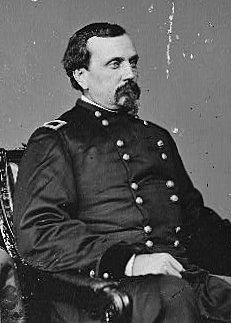 Several times today, amid blanket coverage of the Libby indictment, it’s been mentioned that the now former vice-presidential chief of staff is “the first sitting White House official to be indicted in 130 years.” So who was the previously incriminated figure to whom these pundits are referring? Apparently it is the long-forgotten Orville E. Babcock, a Vermont-born general in America’s Civil War who went on to become the private secretary to President Ulysses S. Grant. In 1875 Babcock was indicted by a grand jury for his involvement in the Whiskey Ring scandal, rooted in a bribery scheme engineered primarily by Republican politicos who drained off millions of dollars in federal taxes assessed against liquor. Babcock demanded that he be given a court martial; instead, he was brought to trial in a civil court in February 1876, but escaped conviction thanks to a deposition by Grant himself. The president later pardoned Babcock--a decision that convinced many U.S. residents of Grant’s corruption, even though he wasn’t directly implicated in this or the other scandals that erupted during his two White House terms.
READ MORE: “Scooter Who?: How Bush Will Deal With the Libby Indictment,” by John Dickerson (Slate); “A Weakened President Faces New Risks,” by Dan Balz and Juliet Eilperin (The Washington Post); “Exposing Scooter’s Crimes,” by Michael Scherer and Mark Benjamin (Salon); “Historically, Aides Pay a High Price in Political Scandals,” by Faye Fiore (Los Angeles Times); “Democrats Say Problems at White House Go Beyond Libby,” by Brian Knowlton (International Herald Tribune); “All the Vice President’s Men,” by Juan Cole (Salon); “Where Does This Scandal Rank?” by Richard Shenkman (History News Network) “The False Moral Superiority of the Bush White House,” by Paul Begala (The Huffington Post); “Will the Bush Administration Implode?” by Tom Engelhardt (Salon); “Carl Bernstein Finds Plame Parallels to Watergate,” by Joe Strupp (Editor & Publisher); “Hari-Karl: Why Bush Should Tell Rove to Follow in Miers’s Footsteps,” by Bruce Reed (Slate); “Shipwrecked,” by Sidney Blumenthal (Salon); “Culture of Corruption in Handcuffs,” by Oliver Willis; Can the GOP Make Lemonade out of Miers?” by Michael Scherer (Salon); “Answered Prayers: How Bush Lost the Miers Fight,” by John Dickerson (Slate); “Expect Fight Over New Nominee” (CBS News); “They Say the Buck Stops in the Oval Office, But It Doesn’t,” by David L. Roll (History News Network).
Sunday, October 02, 2005
But You Forgot to Mention His Poor Posture
[[R I V A L R I E S]] * You’ve gotta give U.S. Representative Charles Rangel (D-New York) points for chutzpah. He often says what others only wish they had the courage to utter. Now, for the second time in two months, this gravely voiced pol is questioning whether Dick Cheney is fit to continue as vice president of the United States. During an interview yesterday with NY1, the New York City-based all-news channel, Rangel was asked whether Cheney--who’s already had four heart attacks and was just recently operated on to repair aneurysms behind both knees--should step down from his job, due to ill health. In response, Rangel quipped: “He should never have stepped up in the first place. He’s too old for the job and doesn’t have the experience.”
(Cheney is 64--just five years older than Bush--but with his pallor and bald pate, he looks significantly more ancient than that.)
However, Rangel didn’t quit talking about Cheney after only one opportunity. Later in that same interview, after spelling out a series of disagreements he has with Bush administration policies, the congressman said of the veep: “I would like to believe he’s sick rather than just mean and evil.”
Can’t you just hear Dubya’s dwindling number of supporters right now, leveling their rhetorical big guns in ol’ Charley’s direction?
(Cheney is 64--just five years older than Bush--but with his pallor and bald pate, he looks significantly more ancient than that.)
However, Rangel didn’t quit talking about Cheney after only one opportunity. Later in that same interview, after spelling out a series of disagreements he has with Bush administration policies, the congressman said of the veep: “I would like to believe he’s sick rather than just mean and evil.”
Can’t you just hear Dubya’s dwindling number of supporters right now, leveling their rhetorical big guns in ol’ Charley’s direction?
Subscribe to:
Posts (Atom)